High Noise Communication
 Respirators & PAPR Communication
 HazMat & In-Suit Communication
 Intrinsically Safe Communication
 Air Traffic Control/Emergency Dispatch
 Construction Communication
 Commercial/Business Communication
 Plant Tours & Training
 Schools & Higher Education
 Workplace Hearing Protection
 Hearing Protection For Recreation & Home
 TeamTalk Hands-Free Communication
 Talk Through Your Ears®
 RadioGear® Earsets
 Headsets
 Custom Hearing Protection
 Filtered Hearing Protection
 Fit Testing
 Hytera Radios
 Horizon Push-To-Talk Over Cellular
 Hytera Repeater Systems
 Kenwood Radios
 Maxon Radios
 RCA Radios
 Full-Duplex TeamTalk™
 CavCom Accessories
 Lapel Speaker Mics
 Radio System Design and Development
 Radio Licensing, Programming & Repairs

IN THIS GUIDE
Is Custom Hearing Protection Right for You?Individualized Fit and ComfortConsistency Of ProtectionCommunication and Personal SafetyCost SavingsClean & Go GreenWhat Goes Into a Custom Hearing Protector ProgramWhy Choose CavComChoosing the Right Partner for Your Custom Hearing Protection ProgramIs It True That Custom Hearing Protection Requires a New Ear Impression Every 5 Years?Custom Hearing Protection? Let's Do a Deep Dive!
Talk To An ExpertUse Our CalculatorNot Sure Who to Trust With Your Program? Get The ChecklistIs Custom Hearing Protection Right for You?
 Let's talk about the real world. A hearing protector with a stellar lab-tested Noise Reduction Rating (NRR) means nothing if your employees won't wear it. And they won't — not if it's uncomfortable, gets in the way of other PPE, or makes it impossible to hear important conversations and warnings in the workplace.
Here's the good news: personalized custom technology has changed the game, for hearing protectors and communication earsets alike. Custom-made earpieces save you money, and knock down the toughest objections you hear on the floor — the ones that have you fighting an uphill battle for compliance every single day.
The Cost Myth
Most people assume a custom hearing protection program means a big budget and a complicated process. It doesn't. At CavCom, for roughly the price of a pair of work boots, you get precision-fit custom hearing protection that's built to last for years. Reliable. Comfortable. Affordable. That's the reality.

Individualized Fit and Comfort
 The best NRR in the world is worthless if the earplug sits in a locker instead of an ear. Comfort isn't a nice-to-have — it's the single biggest driver of whether hearing protection actually gets worn. The employee will only wear a protector if it's comfortable and compatible with other PPE.
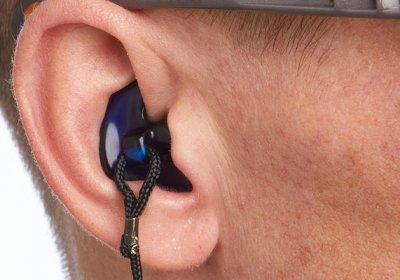
This is where one-size-fits-all falls apart. Ears aren't uniform. Some are small, some are large, some have been reshaped by surgery, disease, or injury in ways that make standard foam or flanged plugs a poor — even impossible — fit. Custom hearing protection sidesteps the problem entirely: it's built around that ear, on that person, however unique the anatomy.
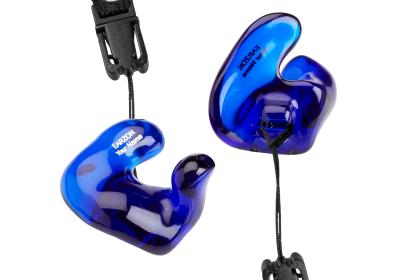
And the benefit goes beyond the physical fit. A custom-made product tells an employee: we built this for you, specifically. That personal attention translates directly into motivation — employees are simply more likely to wear, care for, and advocate for something made just for them. CavCom takes that a step further, engraving each user's name right on the earpiece. It's a small touch, but it reinforces a simple message: this one's yours.
Consistency Of Protection

Not all earplugs are created equal — and the gap between "lab rating" and "real-world protection" can be enormous. A protector's actual performance depends heavily on design and, just as critically, on how well it fits the individual wearing it.
This is where custom hearing protection pulls ahead. Because a custom earplug fits the ear one way, precisely, research consistently shows its real-world protection tracks much closer to its lab-rated NRR than off-the-shelf alternatives ever achieve.
The data back this up. Through Individual Hearing Protection Fit Testing across hundreds of industrial workers, CavCom has found that our custom hearing protectors and earsets deliver significantly higher real-world protection than an NRR-based calculation would even predict. Flanged and foam earplugs, by contrast, typically fall short of their lab numbers — some by more than half.
Why? Custom hearing protectors are far less susceptible to poor insertion. There's no guessing, no rolling, no re-seating throughout the shift — just a precise, repeatable fit that delivers consistent, higher attenuation, shift after shift.
Communication and Personal Safety
You've seen it happen. An employee breaks the seal on an earplug or lifts an earmuff off their ear — just for a second — so they can hear a coworker, a forklift backing up, an alarm. Workers who are hard of hearing tend to do this the most, which is exactly backwards: they're the ones who can least afford to lose that protection, and breaking the seal usually doesn't even solve the communication problem. Now they're exposed to hazardous noise and still straining to hear. Worst of both worlds.
 So what actually fixes this? There are only two ways to improve how well someone hears in a noisy environment: turn up the speech or warning signal, or turn down the background noise. Engineering controls can chip away at noise at the source, but that only goes so far. And the human side of the equation has hard limits — a person can only shout so loud, for so long, before their voice gives out. Cranking up the PA system to compete with background noise isn't a real fix either; it just adds more noise exposure for everyone else in the room.
The better answer: custom hearing protectors engineered to block background noise without blocking speech and warning signals. These aren't hearing aids — but by design, they often improve communication for everyone who wears them, including workers with existing hearing loss.
Here's how CavCom does it. Our high-fidelity acoustic filters use patented membrane technology to deliver precise, uniform attenuation — cutting the noise, not the signal. Unlike open vents or narrow resistive-tube designs, our filters use a relatively large aperture, letting natural sound pass through the mesh layers instead of getting choked off. The membrane itself is breathable, which means less of that plugged-up, occluded feeling that makes people want to rip their protection out in the first place.
That matters more than it might seem. Discomfort and over-protection are two of the top reasons hearing protection fails in the real world — not because the product doesn't work, but because people stop wearing it correctly. CavCom‘s technology is engineered specifically to solve both problems at once: real comfort, and natural hearing of speech and the sounds that keep people safe.
Cost Savings
Here's a number that surprises most safety managers: custom hearing protectors often cost less over time than the inexpensive disposable earplugs you're buying by the case.
Yes, the upfront investment is higher. But custom hearing protectors are built to last for years, not hours — so that investment pays for itself faster than you'd expect, and then keeps paying dividends. No more recurring orders. No more line items for replacement foam every single month, forever.
Take a typical workplace of 100 employees. Foam earplugs feel cheap at $0.25 a pair — until you're buying two pairs a day, every workday, year after year. That "inexpensive" option quietly costs $12,000 annually, with no end in sight. CavCom custom earplugs, on the other hand, run $18,000 in year one - and then last for years. Your cost is only for an occasional replacement when the custom is lost or damaged.
Run the numbers out and the picture gets compelling: $37,604 in savings after 5 years. $92,109 after 10.
The upfront number is what gets noticed. The recurring number is what gets budgeted. Custom hearing protection wins by far.
| Traditional Foam Earplugs | |
| At 1 Year | $12,000 |
| Ongoing Yearly Expense | $12,000 |
| At 5 Years | $60,000 |
| At 10 Years | $120,000 |
| Custom EarzON® Earplugs | |
| At 1 Year | $18,000 |
| Ongoing Yearly Expense | $1,099 |
| At 5 Years | $22,396 |
| At 10 Years | $27,891 |
Foam figures based on average $0.25 per pair, 2 pair a day, 240 workdays a year ($120 annually per person). Custom figures based on average cost of hearing protection and impression fees, estimated $180 per person (quantity discounts available), plus $99.50 additional annual cost based on 2% loss/replacement per year, plus a 5% turnover rate.
| Total cost savings after 5 years | Total cost savings after 10 years |
| $37,604 | $92,109 |
Clean & Go Green
Hot. Dirty. Dusty. Greasy. Laced with chemicals that irritate skin on contact. That's the reality of many industrial work environments — and it's exactly the environment where disposable foam earplugs struggle most. They have to be rolled and compressed between the fingers before every single insertion, which means dirty hands are touching them right before they go into an ear canal. Custom earplugs skip that step entirely. No rolling, no compression — and if properly made, they won't absorb oil or grime in the first place. When they do need cleaning, soap and water is all it takes.
Then there's the waste. It's startling once you actually look at the numbers: a typical workforce can throw away tens of thousands of foam earplugs every single year. All of it manufactured, packaged, shipped, worn briefly, and landfilled — over and over, shift after shift.
For a workforce of 100 employees, disposable foam adds up to roughly 1,095 lbs. of waste every 5 years. A custom product, worn for years and replaced only occasionally, generates about 50 lbs. in one-time impression waste for that same group — a footprint reduction of up to 95%.
There's a cleanup benefit too. Clients regularly tell us their floors — and their septic systems — are cleaner once foam earplugs stop ending up everywhere except the trash can. Moving to custom hearing protection doesn't just save your bottom line. It saves your floors, your plumbing, and a genuinely staggering amount of waste.

What Goes Into a Custom Hearing Protector Program
So what actually is a custom hearing protector? Simply put, it's a lab-made earplug or communication earpiece built for one person's ears, and no one else's. The process starts with ear impressions — a soft, putty-like material captures the exact shape of the individual's outer ear and ear canal. That impression is then sent to a professional lab, where it becomes the blueprint for a precisely fitted earplug or radio communication earset.
A word of caution here: not all "custom" claims are equal. Be wary of moldable products marketed as instant, hand-molded earplugs — they may feel custom in the moment, but they often fit poorly and don't hold up to daily wear. True custom manufacturing takes more than a few minutes and a bag of putty.
Even among labs, methods vary. Some still rely on a manual process — physically creating negative, then positive, molds from the ear impression, shaped by hand by a technician. CavCom takes a more precise route: our process begins with state-of-the-art digital scanning of the ear impression, then the earpiece is digitally modeled to capture every contour of the individual's ear. The final earplug is then crafted from acrylic or silicone, depending on the application and the user's preference.
One more advantage of going digital: the file doesn't disappear once the earplug ships. CavCom stores each digital scan indefinitely, so ordering an exact replacement — whether from loss or damage - is fast, precise, and doesn't require the employee to sit through another impression appointment. This also allows you to add a new custom product using the same digitally stored ear impression.
STEP BY STEP
|
||
 |
Assess Your Facility Noise & Scope of Project |
 |
 |
Is Custom Hearing Protection Right For you? CavCom provides pricing and calculates a customized return on investment (ROI) for your company |
 |
 |
Take Employee Impressions CavCom techs come on-site to take impressions for each employee — shift by shift |
 |
 |
Digitally Scan & Store CavCom scans impressions and stores them indefinitely for quick and easy remakes and new product orders |
 |
 |
Lab Manufactures the Fit CavCom‘s digital lab creates each earpiece to the individual fit — about a 2-week turnaround |
 |
 |
Distribute, Fit and Train You receive each employee's personalized precision-built hearing protectors; CavCom available for fit testing |
 |
Why Choose CavCom
Everything you've just read — the comfort, the consistency, the communication benefits, the cost savings, the reduced waste — comes down to one core idea: hearing protection only works if people actually wear it, correctly, every single day. CavCom‘s durable, custom-fit earsets and earplugs are built for exactly that. One ear impression, taken once, becomes the foundation for hearing protection that lasts for years — no more waste, no more recurring costs, no more fighting for buy-in.
Our unique benefits
- On-site ear impression services available
- Quick turnaround — typically 3 weeks
- 90-day fit guarantee
- 3-year product warranty
- No expiration date or automatic replacement schedule
- Digitally stored ear impressions for fast, easy reorders
- Multiple NRR options (11–26)
- High-fidelity filtered options for better communication
- Multiple materials and colors
- Metal-detectable options available
- Laser-engraved name on every earpiece
- Dedicated account manager for exceptional customer service
Ready to see what a real difference looks like? Contact CavCom to get your custom hearing protection program started.
Choosing the Right Partner for Your Custom Hearing Protection Program
Custom hearing protection isn't a one-time purchase — it's a long-term program. That means choosing the right partner matters just as much as choosing the right product. A great earplug backed by poor support will eventually fail your workers; a great partner will keep your program working for years, through on-site visits, replacements, and turnover.
At CavCom, we take pride in both — products built to perform, and service built to back them up. Your success is our success, and we've built our program around that.
Use the checklist below to evaluate any custom hearing protection partner, including us. We think it holds up.
Ear Impressions
| CavCom | Other | |
| Are on-site ear impression services available? |
 |
|
| Are technicians available across multiple work shifts? |
 |
|
| Are fit guarantees offered? |
|
|
| Are ear impressions stored electronically for life? |
|
Custom Earplugs and Earsets
| CavCom | Other | |
| Are multiple material options available, such as acrylic and silicone? |
|
|
| Are acoustic filters available for improving ambient clarity, including speech? |
|
|
| Are user names engraved into each earpiece for easy ID? |
|
|
| Are product warranties available? |
|
|
| Are replacements available without requiring a new ear impression? |
|
|
| Are custom products MADE in USA? |
|
|
| Are custom products designed to last 5+ years? | |
Customer Service
| CavCom | Other | |
| Are ROI estimates available comparing customs to disposables? |
|
|
| Are customers assigned a dedicated account manager? |
|
Ready to see how CavCom can support your program? Book a meeting with our team to talk through your hearing protection goals and how we can help you get there.
Is It True That Custom Hearing Protection Requires a New Ear Impression Every 5 Years?
No, you don't need a new ear impression every 5 years — here's what the science actually says
If you manage a hearing conservation program, you've probably heard the claim: custom hearing protection needs to be refit every five years because the earcanal changes size and shape. It's repeated so often in this industry that it's treated as settled fact.
It isn't. And for safety managers budgeting time, travel, and dollars around a company-wide refitting cycle, that distinction is worth understanding.
What actually changes as we age — and what doesn't
The outer ear — the visible pinna and earlobe — is made of cartilage and soft tissue, and can appear larger or longer with age due to structural changes in cartilage and skin. The pinna doesn't actually "grow"; instead, the cartilage gradually loses elasticity, and gravity does its work. That's why ears can look slightly longer in a 60-year-old than a 25-year-old.
The earcanal — the part a custom earplug or earset actually seals against — is a different structure entirely. It's a mix of cartilage near the opening and bone deeper in, and that geometry is established early. Anatomical studies of children and adults have found that adult-like earcanal characteristics emerge between ages 10 and 15, coinciding with puberty. For adults, the earcanal does not grow in size or volume with age. In addition, there is no scientific evidence indicating that weight changes directly affect the anatomical size/volume of the earcanal. Late in life, changes such as thinner skin and loss of elasticity may affect comfort, though not the size of the earcanal.
So why does the "5-year refit" claim persist?
A few reasons, and none of them are really about your earcanal:
-
Confusing the product lifespan with impression accuracy. Custom earplugs are typically made from silicone or acrylic, and depending on manufacturing methods, care and use, they can degrade over time. So depending on your work environment and whether the worker is taking good care of the earplug, there may be a real reason to replace the earpiece. But it's not because the impression on file has gone bad.
- Some companies have built a business model around recurring refits. A mandatory refit cycle means a mandatory recurring appointment, a mandatory new mold, and a mandatory new charge — every five years, for every employee, for the life of your program. That may be a convenient business model for the vendor, but not necessary and not most cost-effective for you.
- Genuine special cases getting generalized into a blanket rule. There are legitimate reasons someone's fit might change such as ear disease, surgery, or injury. But they're specific medical events, not a ticking five-year clock.
When a new impression is warranted
To be clear, we're not saying impressions never need updating. They do, in specific situations:
- Ear surgery or trauma affecting the canal
- Ear disease/disorders that alter the earcanal
- Chronic seal or comfort complaints that don't resolve with a fresh earpiece molded or modified from the existing impression
Outside of these situations, there's no anatomical basis for assuming the earcanal has drifted just because a calendar page turned.
What this means for your program
This is exactly why CavCom stores every ear impression electronically for the life of the employee. If a custom earplug or earset is lost or broken, or if an employee simply needs a spare, we manufacture a replacement product from the impression already on file. No new appointment. No new ear impression. CavCom‘s 30 years of experience backs this up in practice, not just in theory: we routinely and successfully remake custom earplugs and earsets years after an original ear impression.
The bottom line: your hearing conservation program should be built around reality, not a refit cycle that was never really about anatomy in the first place. And for peace of mind, CavCom always recommends hearing protection fit testing to confirm employees are receiving the amount of attenuation intended.
To learn more: Aging and the Earcanal: What It Means for Hearing Protection | CavCom
Have questions about your current hearing protection program, or want to see how a fit-for-tenure model compares to routine recurring refits or years of foam disposable earplugs? Talk to a CavCom expert or use our ROI calculator to see the difference over time.